
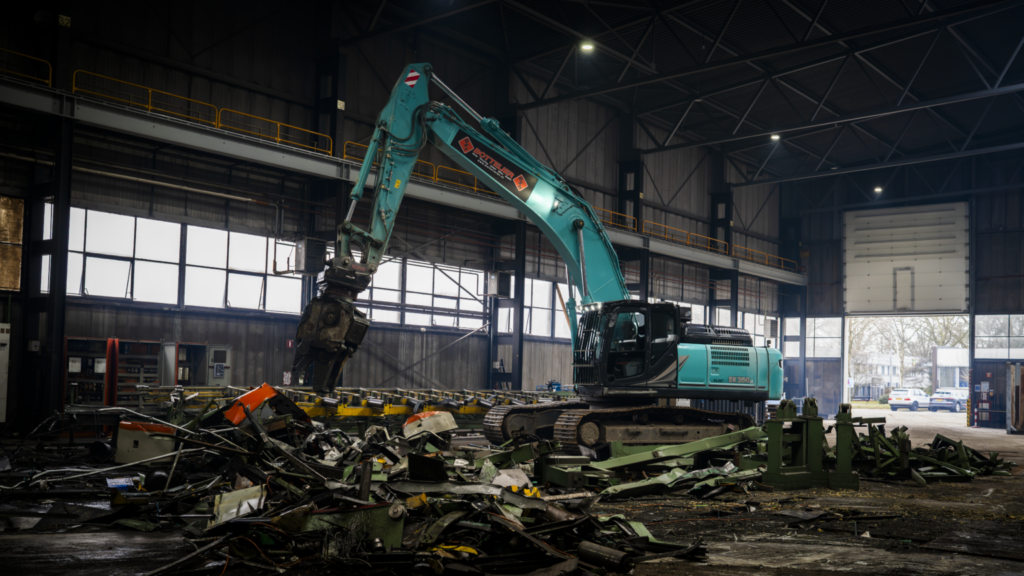
Decommissioning has a direct positive impact on employment in the region. A large-scale decommissioning project attracts both specialized professionals and local subcontractors, resulting in temporary but significant economic activity in the surrounding area. The impact varies by project type, sector, and the way clients structure their procurement strategy. In this article, we answer the most frequently asked questions about decommissioning and employment.
How many jobs does a large-scale demolition project create?
A large-scale demolition or dismantling project directly creates tens to hundreds of jobs, depending on the size and complexity of the project. In addition to the direct operational positions on the construction site, indirect jobs are also created at suppliers, transport companies, and processing companies in the region. Consequently, the total employment impact of a major industrial dismantling project far exceeds the direct project staffing.
For an average industrial dismantling project, you can think of roles such as demolition workers, crane operators, welders, asbestos removers, safety coordinators, project managers, and logistics staff. Each of these roles requires specific certification and expertise. In addition to these direct positions, larger projects also generate a demand for catering, security, cleaning, and technical support. These are roles that local companies can often fill effectively.
The duration of a project also plays a role. Dismantling a complete factory or power plant can take months to years, which means that the employment impact on the region is felt for a long time. This distinguishes dismantling projects from short-term construction activities.
Which local sectors benefit from a dismantling project?
Multiple local sectors benefit from a dismantling project in the region. The most direct beneficiaries are the transport and logistics sector, the recycling and waste processing industry, and specialized technical service providers. However, the hospitality industry, retail, and business services also experience the economic activity brought about by a large project.
Transport companies are engaged to remove released materials. Recycling companies process metals, concrete, and other construction materials released during industrial dismantling . Engineering and consultancy firms provide support with permit applications, environmental reports, and soil investigations. All these activities create a demand for local expertise.
In addition, specialist cleaning and remediation companies benefit from the assignments arising around a dismantling project. Examples include cleaning tanks, remediating contaminated soil, or removing asbestos. These activities require certified parties and are often organized regionally.
What happens to employees after the dismantling is completed?
Upon completion of a dismantling project, employees move on to similar projects elsewhere, return to their permanent employer, or start working on new activities at the vacated site. The turnover of specialized professionals in the demolition sector is high because the demand for dismantling services in the Netherlands remains structurally present.
For temporarily hired local workers, the situation is sometimes different. They benefit from employment during the project but do not always have a direct follow-up position afterwards. Clients and contractors can anticipate this by making agreements at the start of the project regarding training programs or opportunities for progression to the site's redevelopment phase.
In regions where multiple large dismantling projects follow one another, such as around industrial clusters or ports, the employment situation for specialized professionals is more stable. They move along with their employer's project portfolio and therefore remain structurally active in the sector.
How does the employment impact differ between industrial and civil demolition?
Industrial dismantling typically results in a higher and more specialized employment impact than civil demolition. Industrial projects require more certified professionals, have longer project durations, and demand for subcontractors is greater. Civil demolition, such as the demolition of homes or infrastructure, generates more generic jobs but requires less in-depth specialization.
For industrial dismantling in sectors such as the (petro)chemical, energy generation, or pharmaceutical industries, specific safety certifications are mandatory. Examples include VCA Petrochemicals or certifications for asbestos removal and chromium-6. This increases the wage value per job and attracts skilled workers who are difficult to find elsewhere in the region.
Civil demolition projects more often have a shorter lead time and are more widely distributed geographically. As a result, the local employment impact per project is smaller, but the total contribution to regional employment over a full year can be comparable to that of a single large industrial project.
How can clients maximize regional employment?
Clients can maximize regional employment by explicitly steering local procurement when selecting contractors and subcontractors. Concrete measures include incorporating Social Return clauses into contracts, giving preference to regional suppliers, and employing local workers through partnerships with regional employment agencies or training institutions.
Practical steps clients can take:
- Stipulate requirements in the specifications regarding the use of local subcontractors or suppliers
- Include Social Return on Investment (SROI) as an award criterion
- Make agreements regarding the training of local workers for specific tasks
- Involve the municipality or the regional economic cooperation association early in the process
- Consult with the contractor regarding the possibility of regionally marketing or reusing released materials
Transparency in the tendering procedure also helps. When you, as the client, communicate in a timely manner about the scope and schedule of a dismantling project, local companies can better prepare for the resulting demand. This increases the likelihood that the economic benefits will actually accrue in the region.
How we contribute to employment and regional impact
As specialists in industrial dismantling, we execute projects where regional employment is a concrete outcome, not merely a side effect. We work turn-key, which means we handle the entire process: from advice and permit applications to documented delivery. Within this framework, we actively utilize regional knowledge and capacity.
What we offer for clients who also have an eye for regional employment:
- Turnkey dismantling solutions including cleaning, dismantling, asbestos removal, and soil remediation
- Deployment of certified professionals with knowledge of local laws and regulations
- A reuse rate of 99%, which also provides work for regional recycling companies
- Corporate Social Responsibility at CSR Performance Ladder level 3
- Method that does not disrupt production processes at active installations
Would you like to know how we can structure your decommissioning project with maximum regional impact? Contact us , and we will be happy to brainstorm with you.