
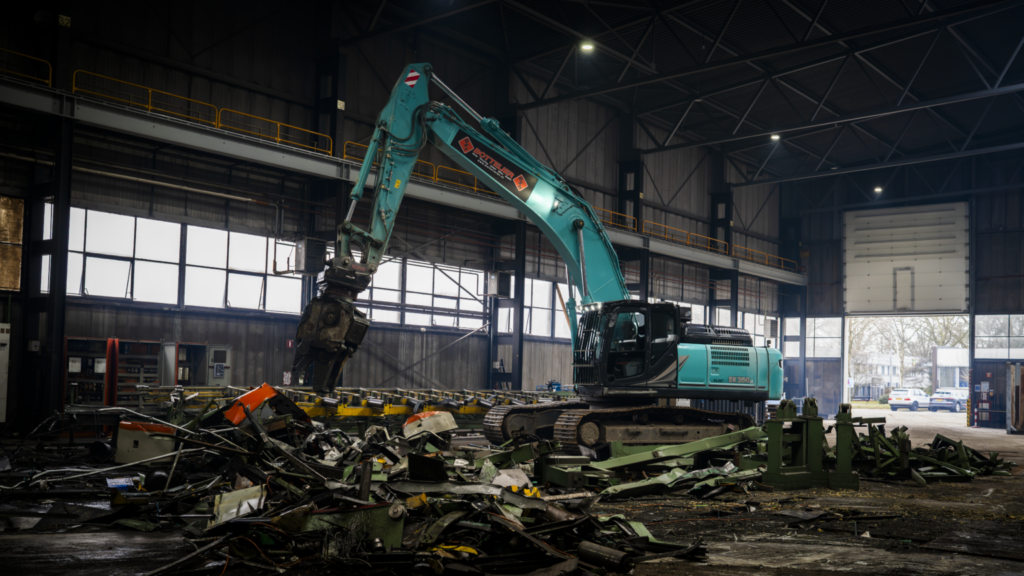
At the start of a factory dismantling, the same questions always come up: what is mandatory, how long does it take, and what happens to everything that is left behind? The most frequently asked questions revolve around permits, planning, material handling, safety, and choosing the right contractor. In this article, we answer those questions directly and concretely, so that you enter an industrial demolition project well-prepared.
Which permits are required for factory dismantling?
For factory dismantling, you almost always need an environmental permit for demolition activities. Depending on the location, the presence of hazardous substances, and the scale of the project, additional permits may be required, such as an environmental permit, an asbestos removal permit, or a water permit if the work takes place near dikes.
Permit requirements vary by municipality and by type of installation. Stricter requirements generally apply to industrial facilities in the (petro)chemical or energy sectors due to the presence of hazardous residues. In most cases, a demolition safety plan and an inventory report for hazardous materials are mandatory documents with the permit application.
In practical terms, it is advisable to initiate the permit procedure well before the planned start date. Municipalities have processing times that can run into several weeks or months, depending on the complexity of the project and any objection procedures.
How long does a complete factory dismantling take?
The lead time for a complete plant dismantling varies widely, ranging from a few weeks for smaller installations to several years for large industrial complexes. The schedule is determined by factors such as the size of the site, the presence of hazardous substances, the complexity of the installations, and the required permits.
A realistic timeline consists of multiple phases. First comes the preparation phase, during which inventories are carried out, permits are applied for, and a project plan is drawn up. This is followed by the cleaning and remediation phase, during which installations are cleared of hazardous residues. Subsequently, the actual dismantling and demolition take place, followed by the removal and processing of materials and the handover of the site ready for construction.
For a medium-sized factory containing asbestos and chemical residues, you should account for a total project duration of six months to two years, including preparation and delivery. Detailed planning in advance prevents delays and cost overruns.
What happens to the materials after dismantling?
After factory dismantling, the released materials are sorted, reused, recycled, or disposed of responsibly. Steel, concrete, copper, and other metals are in most cases suitable for reuse or recycling. Hazardous substances such as asbestos, chemical residues, or contaminated soil are processed separately by certified processors.
In a circular approach to industrial dismantling, reuse takes precedence over scrapping. This means that usable installations, machines, or parts are disassembled, cleaned, and made available for relocation or sale. This reduces the environmental impact and can increase the residual value of the project.
A reuse rate of 99% is achievable when the dismantling is carefully prepared and executed by a contractor with the right knowledge of material flows. This requires a thorough prior inventory and the appropriate certifications for waste processing and environmental management, such as ISO 14001.
Can dismantling take place while the factory is still in operation?
Yes, the dismantling of a factory or installation can take place while the production process continues elsewhere on the site, but this requires precise planning and strict safety measures. Partial dismantling of operational installations is a specialty that not every contractor masters.
The keywords here are zoning, phasing, and communication. The work area is clearly demarcated from active production zones. Activities are carried out in phases to ensure operational continuity. Safety plans and risk analyses are tailored to the specific conditions of the active environment.
For industrial clients in the chemical or pharmaceutical sector, this is often a strict prerequisite: the production process must not be delayed. A contractor who masters this approach combines technical expertise with strong project coordination and direct communication with the client during execution.
Who is responsible for asbestos during factory dismantling?
The client is legally responsible for having an asbestos survey carried out before demolition work begins. The actual asbestos removal may only be carried out by a certified asbestos removal company holding the asbestos removal process certificate (SC 530).
In practice, this means that the contractor carrying out the dismantling must be demonstrably certified for asbestos remediation. The inventory is documented in an asbestos inventory report (type A or type B, depending on the situation), which subsequently serves as the basis for the remediation plan and the permit application.
In industrial facilities, such as factories built before 1994, the likelihood of asbestos-containing materials is high. Examples include insulation material around pipes, sheet material in walls and roofs, and gaskets in installations. A thorough inventory prevents unexpected costs and legal risks during execution.
How do you choose a reliable contractor for industrial decommissioning?
You can recognize a reliable contractor for industrial dismantling by broad and demonstrable certification, relevant experience in your sector, and the ability to handle the entire process on a turnkey basis. Always ask for reference projects, relevant certificates, and how the contractor handles safety and environmental legislation.
Concrete criteria to look out for:
- Does the contractor possess SC 530 (asbestos removal process certificate) and VCA Petrochemicals?
- Are ISO 14001 and NEN-EN-ISO 9001 in place for quality and environmental management?
- Can the contractor handle the entire process, from advice and permit applications to documented delivery?
- Does the contractor have demonstrable experience with dismantling at operational installations?
- How does the contractor handle material reuse and circular processing?
In addition to certificates, communication also counts. A contractor who reports proactively, presents a clear project plan, and is available during execution significantly reduces the chance of surprises. Also inquire about how risks are identified and communicated.
How we help with your factory dismantling
We handle the entire industrial dismantling process, from the initial survey to the site-ready handover. Our approach is turnkey: a single point of contact, one responsible party, and an integrated working method that combines safety, planning, and sustainability.
What we arrange for you:
- Asbestos survey and asbestos remediation with SC 530 certification
- Permit applications and legal documentation
- Cleaning of installations and removal of hazardous residues
- Dismantling of complete production lines, installations, and equipment
- Circular material processing with a reuse rate of 99%
- Project management and documented delivery
We work in sectors such as the (petro)chemical, pharmaceutical, food, and energy generation industries, including on operational installations. Our certifications, including ISO 14001, NEN-EN-ISO 9001, VCA Petrochemicals, and CSR Performance Ladder Level 3, give you, as the client, the assurance that the project is executed safely, compliantly, and sustainably. Contact us to discuss the possibilities for your project.