
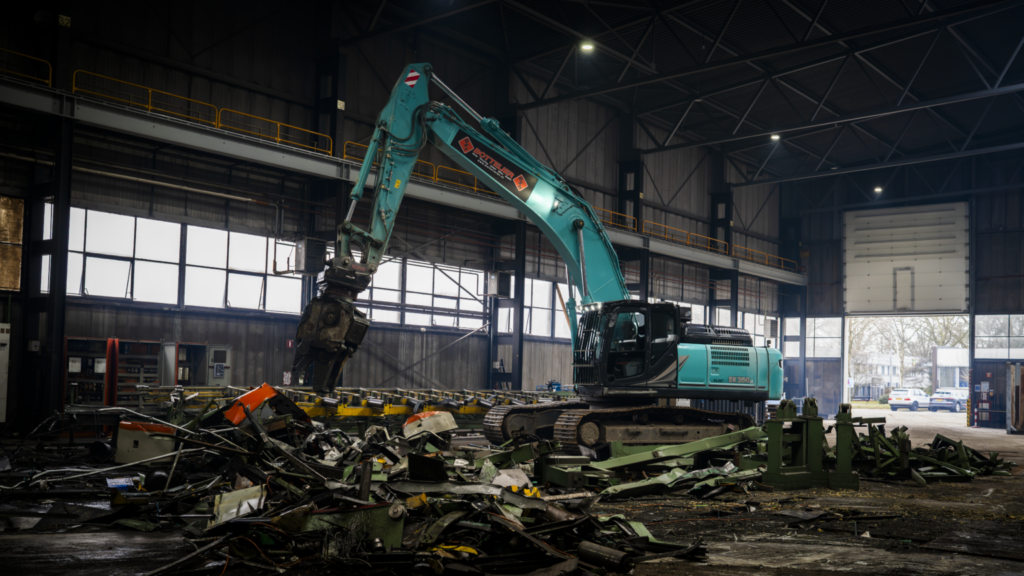
Factory dismantling has a direct impact on the environment, but the extent of that impact depends heavily on how the work is carried out. Careless dismantling can release hazardous substances, contaminate the soil, and cause waste to end up in landfills unnecessarily. A professional approach involving the right certifications, remediation techniques, and circular practices significantly minimizes these environmental effects. The questions below provide a clear picture of the key environmental aspects of industrial dismantling.
Which harmful substances are released during factory dismantling?
During factory dismantling, various hazardous substances can be released, depending on the sector and the age of the installation. The most common are asbestos, chromium-6, heavy metals, hydrocarbons, process chemicals, and residual gases in pipes and tanks. These substances pose a risk to both the health of employees and the environment if they are not removed in a controlled manner.
Older industrial installations, such as those in the petrochemical, steel, or power generation industries, often contain multiple hazardous materials simultaneously. Until well into the 1980s, asbestos was routinely incorporated into insulation materials, gaskets, and fire-resistant cladding. Chromium-6 was widely used in paint coatings on steel. Furthermore, after a plant is shut down, toxic residues may remain in pipes, reactor vessels, or storage tanks that can only be safely dismantled after thorough cleaning.
The environmental impacts of these substances are significant if released uncontrollably. Asbestos can cause lung diseases when inhaled and spreads easily through the air. Hydrocarbons and chemicals contaminate the soil and groundwater. Therefore, a detailed inventory of hazardous substances is a legal requirement before the start of any decommissioning project.
How is soil contamination prevented during demolition work?
Soil contamination during demolition work is prevented by a combination of a prior soil investigation, sealing leakage risks, controlled containment of liquids, and strict separation of waste streams at the work site. A well-executed action plan describes which measures apply to each phase.
Before demolition work begins, an environmental consultant maps the existing soil quality. This is not only useful for planning but is also legally required at industrial sites. During the work, drip trays, foil, and other physical barriers are deployed to prevent residual products from leaking into the ground. Fluids from pipes and tanks are pumped out in a controlled manner and transported to certified processing companies.
Waste streams are strictly separated: hazardous waste, demolition waste, metals, and reusable materials each follow their own route. This separation is both an environmental requirement and a prerequisite for a high reuse rate. In industrial dismantling, soil remediation sometimes plays a role as part of the overall removal process, whereby contaminated soil is treated and disposed of after the demolition work.
What is the difference between circular demolition and traditional demolition?
The difference between circular demolition and traditional demolition lies in the objective: traditional demolition focuses on removing an object as quickly as possible, with materials largely being disposed of as waste. Circular demolition focuses on maximizing the recovery of materials for reuse, significantly reducing the amount of waste and the environmental impact.
In traditional demolition, materials are often demolished in a mixed state and transported to a landfill or processing plant without further sorting. In circular demolition, installations and buildings are systematically dismantled: steel, copper, aluminium, concrete, and other materials are collected separately and returned to the production chain. This requires more preparation, technical knowledge, and logistical organization, but results in significantly less environmental damage.
The environmental benefits of circular demolition are concrete. The reuse of steel and non-ferrous metals saves energy compared to the production of new material. Less waste going to landfill means reduced emissions of harmful substances and less land use. For industrial clients, circular demolition also offers a financial advantage: released materials have a residual value that can be factored into project costs.
Which environmental permits are required for industrial dismantling?
In the Netherlands, multiple permits and notifications are required for industrial dismantling, depending on the nature of the object and the substances present. The most important are a demolition notification pursuant to the Buildings and the Living Environment Decree, an asbestos inventory report, and in many cases, an environmental permit for the demolition of a structure in a protected area or where significant environmental risks are involved.
When asbestos is present, an additional requirement is that a certified asbestos survey company must prepare a report in advance. Based on this, a remediation plan is drawn up that meets the requirements of Working with Asbestos (SC 530 certification). For work near surface water or in a water catchment area, water permits from the water board or Rijkswaterstaat are also required.
For locations subject to the Environmental Management Act or the Environment and Planning Act, an Environmental Impact Assessment (EIA) may be mandatory for large-scale projects. An experienced decommissioning partner typically handles the application and coordination of these permits as part of the overall project process, ensuring that you, as the client, do not have to go through the permitting process without the necessary expertise.
How can demolition work take place without interrupting production?
Demolition work without production interruption is possible through precise phasing, strict demarcation of the work zone, and close coordination with the client's operations. This requires a detailed project plan in which the demolition activities are scheduled around the operational requirements of the installations that remain active.
In practice, this means that dismantling work is carried out in phases: first, the parts of the installation that have been taken out of service are addressed, while the active production units are completely shielded. Vibration and dust control measures prevent the demolition work from affecting adjacent processes. Safety plans and risk analyses for each phase are indispensable in this regard to protect both the company's own employees and the client's personnel.
Good communication between the demolition company's project management and the client's facility manager or technical director is the decisive factor in this regard. Regular progress reports and clear agreements regarding work windows, access routes, and emergency procedures ensure that production continues uninterrupted. This is precisely the working method that industrial clients expect from a partner executing complex projects in an active environment.
Which certifications guarantee environmentally safe demolition execution?
Certifications that guarantee environmentally safe demolition execution include ISO 14001 (environmental management system), SC 530 (asbestos removal process certificate), BRL SVMS-007 (demolition safety management), NEN-EN-ISO 9001 (quality management), and VCA Petrochemie for working in high-risk industrial environments. Together, these certifications form a reliable framework for safe and environmentally conscious demolition work.
ISO 14001 and NEN-EN-ISO 9001
ISO 14001 obligates a company to systematically identify and manage environmental risks in all project phases. This means that environmental aspects such as waste management, emissions, and soil risks are structurally incorporated into the project planning. NEN-EN-ISO 9001 guarantees the quality of work processes and documentation, providing clients with assurance regarding documented and verifiable execution.
SC 530 and BRL SVMS-007
SC 530 is the process certificate specifically required for asbestos removal. Legally, a company is not permitted to carry out asbestos remediation without this certificate. BRL SVMS-007 focuses on safety management during demolition work and sets requirements for risk analyses, workplace layout, and employee qualifications. Both certificates are directly relevant to the environmental impact of demolition work.
How we help you with environmentally safe factory dismantling
We manage the entire decommissioning process for industrial clients, from the initial survey to the documented delivery of a construction-ready site. Our approach focuses on minimizing environmental impact at every step of the process. Specifically, this means:
- A thorough inventory of hazardous substances such as asbestos and chromium-6 before the start of the work
- Controlled cleaning of installations to remove toxic residues before dismantling begins
- Circular processing of released materials with a reuse rate of 99%
- Phasing of the work so that your production process continues uninterrupted
- Full permit guidance and project documentation
- Implementation based on ISO 14001, SC 530, BRL SVMS-007, NEN-EN-ISO 9001 and CSR Performance Ladder level 3
Would you like to know how we keep the environmental impact of your dismantling project as low as possible? Contact us for a no-obligation consultation.