
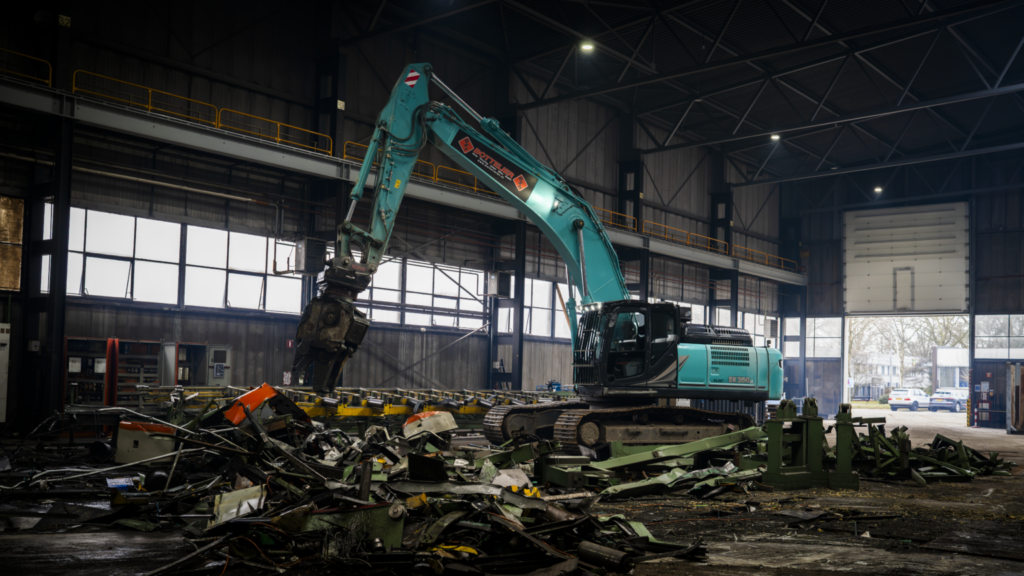
Careless factory dismantling leads to serious consequences regarding safety, the environment, and finances. When industrial dismantling is carried out without proper preparation, certification, or expertise, risks arise that extend far beyond the site itself. This article covers the main hazards and explains how to prevent them.
What risks arise from insufficient preparation for a dismantling?
Insufficient preparation for a factory dismantling directly leads to increased safety risks, unexpected downtime, and cost overruns. Without a thorough inventory of hazardous substances, an up-to-date safety plan, and a clear risk analysis, the foundation for responsibly carrying out an industrial dismantling is lacking.
In complex industrial installations, harmful residues often remain in pipes, tanks, and equipment after shutdown. Examples include toxic process residues, flammable liquids, or radioactive sources. Anyone who fails to systematically inventory and remove these substances before demolition work begins exposes employees and the surrounding area to direct dangers.
In addition, a realistic phasing and logistics plan is often lacking in a poorly prepared dismantling. This leads to conflicts with ongoing production processes on adjacent sites, delays in execution, and ambiguity regarding responsibilities. Good preparation always includes a comprehensive risk analysis, a detailed plan of action, and coordination with all involved parties.
What are the legal consequences of negligent factory dismantling?
Careless demolition can lead to fines, liability claims, and criminal prosecution. Dutch environmental legislation imposes strict requirements on the execution of demolition works, and violations are actively enforced by the Environment and Planning Agency and the Public Prosecution Service.
Clients are legally obliged to submit a demolition notification and ensure that the executing party possesses the required certifications, such as the Asbestos Removal Process Certificate (SC 530) and recognized quality assurance. If these are missing, not only the contractor but also the client is liable for the consequences.
In the event of the release of asbestos, chromium-6, or other hazardous substances due to negligence, parties involved may file damage claims. Remediation costs, legal proceedings, and reputational damage together constitute a financial risk that can exceed the original contract sum several times over. Environmental legislation regarding demolition has been tightened in recent years, and in 2026, compliance is not an option but a strict requirement.
What environmental damage can careless demolition cause?
Carelessly executed factory dismantling can lead to soil contamination, air pollution, and groundwater contamination. This applies in particular when asbestos-containing materials, chemical residues, or contaminated soil are not properly removed, separated, and disposed of.
Asbestos fibers released during demolition work spread through the air and pose a long-term health risk to local residents and workers. Chemical substances leaking into the soil contaminate groundwater and may necessitate remediation of the surrounding area. This type of environmental damage is rarely limited to the demolition site itself.
A responsible approach to industrial dismantling therefore always begins with a thorough cleaning of installations and a careful separation of waste streams. Materials that can be reused do not belong in the incinerator or landfill. Circular demolition minimizes the environmental impact and contributes to a higher residual value of released materials.
How does careless dismantling affect the safety of surrounding installations?
Careless dismantling poses a direct danger to adjacent installations, infrastructure, and business processes. Structural instability, uncontrolled release of materials, and vibrations can cause damage to neighboring buildings or active production units.
In an active industrial environment, space between installations is often limited. Demolition activities not precisely aligned with the surroundings can damage pipes, cables, or load-bearing structures that are part of a still-functioning factory. This leads to unplanned downtime, production losses, and additional repair costs.
Safety during demolition therefore requires more than just personal protective equipment. It calls for detailed structural analyses, coordination with adjacent users, and a phased approach that takes into account the specific risks of each location. Demolition damage to active installations can almost always be prevented with the right expertise and planning.
How much more does a carelessly executed factory dismantling ultimately cost?
Carelessly executed dismantling always ultimately costs more than a carefully planned approach. Direct savings on preparation, certification, or execution time are more than offset by remediation costs, legal claims, environmental fines, and reputational damage.
Concrete cost items arising from careless demolition include:
- Soil remediation as a result of released hazardous substances
- Repair of damage to adjacent installations or infrastructure
- Fines and penalty payments imposed by competent authorities
- Legal costs in liability proceedings
- Production loss due to unplanned downtime of active business units
- Higher insurance costs after an incident
Industrial dismantling is a specialized field where the cheapest provider is rarely the most cost-effective choice. The total project costs, including risk management and compliance with laws and regulations, determine the actual price of a dismantling operation.
How do you prevent the consequences of careless dismantling?
You avoid the consequences of careless factory dismantling by choosing a fully certified contractor who handles the entire process on a turnkey basis. This means: from inventory and permit applications to safe execution, documentation, and documented delivery.
Concrete steps to mitigate risks are:
- Always carry out a thorough inventory of hazardous substances such as asbestos and chromium-6
- Draw up a detailed safety plan and risk analysis before the start of work
- Work exclusively with contractors who hold relevant certifications such as SC 530, ISO 14001, and NEN-EN-ISO 9001
- Ensure coordination with adjacent users and competent authorities
- Opt for a circular approach in which released materials are reused to the maximum extent
- Require complete project documentation upon delivery
A structured approach protects not only employees and the environment, but also the client themselves against legal and financial liability.
How we help with safe and responsible factory dismantling
We manage the entire decommissioning process for industrial clients, from initial surveying to documented delivery ready for construction. Our approach focuses on eliminating precisely the risks described in this article:
- Thorough cleaning and inventory of hazardous substances before the start of demolition work
- Tailor-made safety plans and risk analyses per project
- Execution by one of the most extensively certified demolition contractors in the Netherlands, including SC 530, ISO 14001, NEN-EN-ISO 9001, and CSR Performance Ladder level 3
- Possibility of dismantling at installations in production, without disruption of the business process
- A reuse rate of 99%, minimizing environmental damage and waste costs
- Complete project documentation for a documented and legally demonstrable delivery
Would you like to know how we can handle your dismantling project safely and efficiently? Contact us and we will discuss the possibilities for your specific situation.