
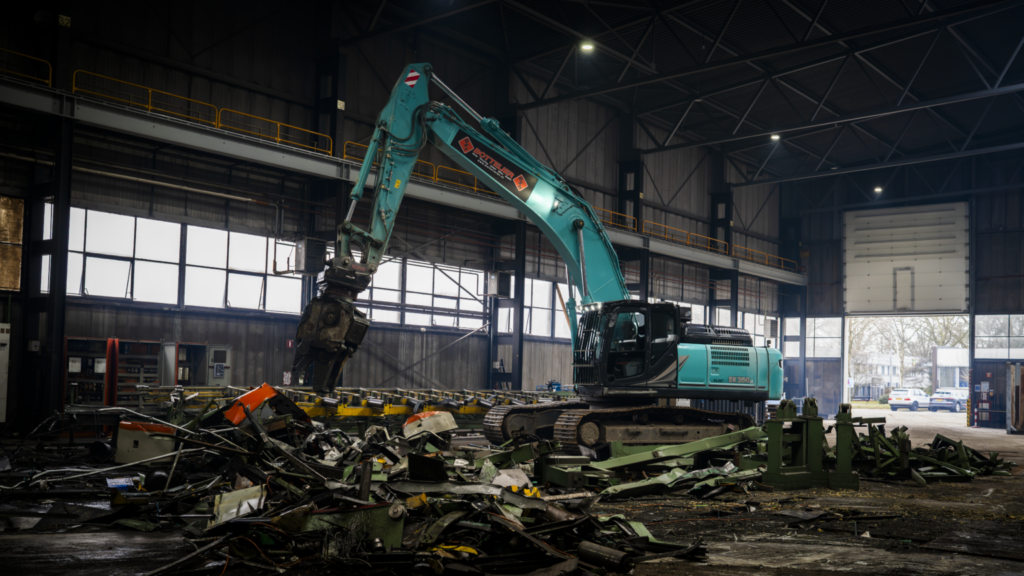
After the dismantling of a factory, site remediation proceeds in multiple phases: first, hazardous substances such as asbestos and chemical residues are removed, followed by soil remediation based on an established remediation plan. The exact approach depends on the nature of the contamination, the zoning of the site, and the applicable laws and regulations. In this article, we answer the most frequently asked questions about factory site remediation following industrial dismantling.
What contaminants are present on a factory site?
Typically, multiple types of contamination are present on a factory site, depending on the activities that have taken place there for years. The most common are: asbestos-containing materials in buildings and installations, heavy metals in the soil, mineral oils and hydrocarbons, solvents and chemical residues, and in some cases chromium-6 or other hazardous process chemicals.
In the (petro)chemical industry, the energy sector, and the heavy manufacturing industry, contamination is often the result of years of process leaks, the storage of hazardous substances, or inadequately covered storage facilities. In such cases, soil contamination sometimes extends meters deep and spreads via groundwater to adjacent properties. This makes a thorough inventory prior to industrial remediation indispensable for a safe and responsible approach.
How does soil remediation proceed after industrial dismantling?
Soil remediation after demolition proceeds in a fixed sequence: first, a soil investigation to determine the nature and extent of the contamination; then drawing up and approving a remediation plan; subsequently carrying out the actual remediation; and finally, documenting the results and releasing the site.
Phase 1: Research and inventory
Before any soil is moved, a certified consultancy firm conducts a preliminary and, if necessary, detailed soil investigation. This investigation maps out which substances are present, in what concentrations, and to what depth. Based on this, you determine which remediation strategy is most suitable.
Phase 2: Remediation plan and implementation
Based on the investigation, you draw up a remediation plan that meets the requirements of the competent authority. Execution may consist of excavating and removing contaminated soil, in-situ remediation where the soil is treated on-site, or a combination of both methods. Upon completion, a final inspection and official release of the site will follow.
What is the difference between asbestos removal and soil remediation?
Asbestos remediation focuses on locating and removing asbestos-containing materials from buildings, structures, and installations. Soil remediation focuses on cleaning contaminated soil and groundwater. Both forms of remediation require a different approach, different certifications, and different laws and regulations.
Industrial asbestos remediation often involves asbestos cement in roofing sheets, insulation material surrounding pipes, floor slabs, and fire-resistant applications. This material must be removed by certified specialists under strictly controlled conditions before demolition or dismantling begins. Soil remediation typically follows the demolition phase, once the structures have been removed and the soil is accessible. In practice, however, the two processes frequently overlap, particularly in large industrial projects where asbestos waste has ended up in the soil.
Who is responsible for the remediation of a factory site?
The legal responsibility for the remediation of a factory site lies with the owner of the site or the party responsible for the contamination. This is stipulated in the Soil Protection Act and the Environment and Planning Act. In practice, this is usually the client who wishes to redevelop or sell the site.
In the event of factory demolition or dismantling, the owner ensures that the site is remediated to a level appropriate for the future intended use. If you wish to rezone the site for residential development, stricter standards apply than for a new industrial purpose. The competent authority, often the municipality or the environmental agency, supervises the execution and approves the remediation plan before work begins.
Which permits are required for the remediation of an industrial site?
For the remediation of an industrial site, you generally need an environmental permit, a notification or decision under the Environment and Planning Act for soil remediation, and a permit for the disposal of hazardous waste. Additional notification requirements apply to asbestos removal.
Exactly which permits apply depends on the scale of the remediation, the nature of the contamination, and the location. For large industrial remediation projects, you work with the competent authority to follow a tailored process. Applying for permits in a timely manner prevents delays in the schedule. An experienced contractor who handles the entire industrial dismantling can coordinate permit applications for you and align with the relevant authorities.
How are materials released after demolition processed in a circular manner?
After factory demolition , released materials are sorted and reused or recycled as much as possible. Steel, concrete, copper, and other metals have a high reuse value. Hazardous materials are collected separately and transported to certified processing companies. Circular demolition aims to limit the proportion of materials going to landfill to a minimum.
In practice, circular processing begins as early as the planning phase, with a materials passport or an inventory of reusable components. Installations and machines that are still functional are dismantled and made available for reuse or resale. Anything that is not reusable is recycled as raw material for new applications. This aligns with European objectives regarding the circular economy and significantly reduces the CO2 footprint of the demolition process.
How we help you with the remediation of a factory site
We handle the entire process of factory site remediation following dismantling, from the initial survey to the documented delivery of a construction-ready site. As a certified specialist in industrial dismantling and remediation, we offer turnkey solutions that unburden you as the client on all fronts. What you can expect from us:
- Complete asbestos removal by certified specialists, before and during the demolition phase
- Soil remediation based on an approved remediation plan, including coordination with the competent authority
- Permit applications and project management as part of the overall process
- Circular processing of released materials with a reuse rate of 99%
- Execution at installations in production, without disrupting your business process
- Broad certification, including ISO 14001, NEN-EN-ISO 9001, SC 530, and CSR Performance Ladder level 3
Would you like to know what we can do for your project? Contact us , and we will be happy to discuss the best approach for the remediation of your factory site.