
The dismantling of process plants proceeds step by step via a structured process that begins with thorough preparation and ends with documented delivery. The sequence includes, among other things, safety inspections, decommissioning, physical dismantling, processing of hazardous substances, and the reuse of released materials. Below, we answer the most frequently asked questions about this process.
What preparations are needed before the dismantling?
Before the dismantling of a process plant, a detailed risk analysis, a technical plan of approach, and the necessary permits are required. In addition, all involved parties are informed, safety plans are drawn up, and the plant is inspected for hazardous substances such as asbestos or chemical residues. Without these steps, safe and legally compliant execution is not possible.
The preparation phase is the foundation of every successful decommissioning project. In practice, this starts with a comprehensive inventory of the installation: what materials are present, what substances are still located in pipes or tanks, and what environmental risks exist? Based on this, tailor-made safety plans and working methods are developed.
Permit applications form a separate part of the preparation. Depending on the location, the substances present, and the scale of the project, environmental permits, notifications under environmental legislation, and sometimes specific exemptions are required. Arranging these in a timely manner prevents delays during execution.
Finally, the logistical preconditions are also determined in this phase: accessibility of the location, availability of heavy equipment, coordination with the client regarding the continuity of nearby production processes, and the planning of work outside business hours if necessary.
How does the safe decommissioning of a process plant proceed?
The decommissioning of a process plant is carried out via a controlled procedure in which all energy sources are isolated, pipes are vented, and residual products are removed. This process is known as “lock-out/tag-out” and ensures that the plant is completely de-energized, pressure-free, and empty before physical dismantling work begins.
Decommissioning is technically one of the most high-risk phases. Residual pressure in pipelines, hazardous gases or liquids, and electrical voltage are real dangers that must be systematically eliminated. To this end, the demolition specialists work closely with the client's technical department.
After isolating energy sources, all pipes, tanks, and equipment are cleaned and flushed. Depending on the substances present, this may require specialized cleaning, for example in the presence of hydrocarbons, acids, or other process chemicals. Only when the installation is demonstrably free of hazardous residues does the responsible project manager authorize the next phase.
What is the sequence of physical dismantling work?
The physical dismantling of a process plant proceeds from top to bottom and from outside to inside. First, the overhead structures, piping, and equipment are dismantled, followed by the load-bearing structures and finally the foundation. This sequence guarantees the stability of the structure throughout the entire process.
In practice, dismantling begins with the removal of all loose components: instrumentation, electrical installations, valves, and fittings. These parts are carefully disassembled because they are often suitable for reuse or resale. Subsequently, larger components such as heat exchangers, reactor vessels, and pumps are hoisted out of the installation.
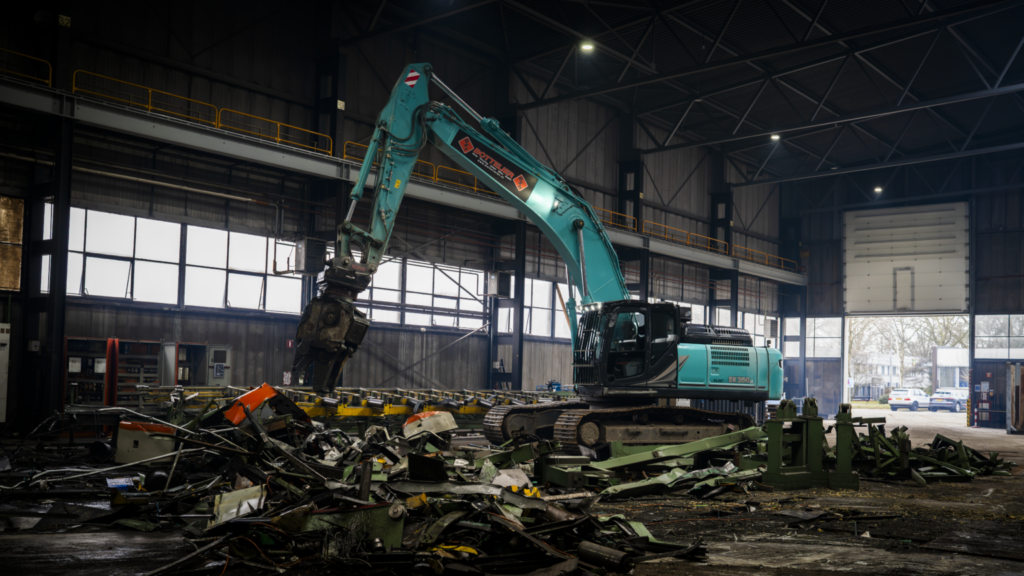
The piping follows the equipment. Pipes are removed section by section, taking into account the presence of insulation material that may contain asbestos. Only after all pipes and equipment have been removed is the steel structure itself dismantled. This is done using cranes, demolition shears, or controlled demolition techniques, depending on the height and weight of the structure.
When dismantling process installations, the sequence also depends on the environment: if an adjacent production line continues to operate, work is planned so that vibrations, dust, and noise do not disrupt production.
How are hazardous substances handled during dismantling?
Hazardous substances such as asbestos, chromium-6, process chemicals, and contaminated soil are processed strictly separately during the dismantling of process plants. Specific legal procedures and certification requirements apply to this. Trained specialists safely remove these substances, after which certified processors handle disposal and processing.
Asbestos is one of the most common hazardous substances encountered during the dismantling of older industrial installations. It can be present in insulation material, gaskets, roofing, and fire-resistant cladding. Remediation requires a process certificate for asbestos removal and strict adherence to the SC 530 standard, including personal protective equipment and controlled disposal to approved processing companies.
In addition to asbestos, process installations in the (petro)chemical, pharmaceutical, or food industries may contain residues of hazardous process chemicals. These are removed by specialized cleaning teams before physical dismantling begins. All actions are documented to demonstrate that processing has taken place in accordance with laws and regulations.
Which materials are reused or recycled after demolition?
After the dismantling of process plants, steel, copper, aluminium, concrete rubble, and reusable equipment are reused or recycled as much as possible. Steel structures and piping go to steel manufacturers, reusable equipment is resold, and concrete rubble is processed into aggregate for the construction industry. The reuse rate can reach up to 99%.
Reuse begins during the dismantling phase. Equipment such as pumps, compressors, heat exchangers, and instrumentation is carefully dismantled and assessed for residual value. Parts that are still functional are offered on the market for second-hand industrial equipment. This reduces the need for new raw materials and sometimes also yields a financial return for the client.
Materials that are not directly reusable are sorted for recycling. Metal fractions go to accredited recycling companies, insulation material is processed separately, and concrete rubble is crushed into reusable aggregate. Only materials that truly cannot be reused or recycled end up as residual waste. Through this approach, dismantling contributes to a circular material flow instead of linear disposal to the landfill.
How is the completion of a decommissioning project documented?
The completion of a dismantling project is documented via a comprehensive file containing evidence of all work performed: asbestos inventories, remediation reports, waste stream records, permit documents, and a final report on the condition of the site. This file constitutes demonstrable proof of legally compliant and safe execution.
The documentation begins during the preparation phase and continues until after the physical handover. Every part of the dismantling process is recorded: which substances have been removed, how they have been processed, which certificates have been used, and which inspections have taken place. This is not only a legal obligation but also an important tool for the client to account to regulators.
Upon final delivery, the client receives a complete project file. This includes, among other things, the waste manifests demonstrating that hazardous waste has been disposed of via recognized channels. The soil quality following the completion of the works is also documented, ensuring the site is ready for construction or otherwise transferable. Transparency and traceability are the guiding principles in this regard.
How Bottelier helps with the dismantling of process plants
We oversee the entire decommissioning process of process plants, from the initial risk analysis to the documented final handover. As a turnkey partner, we assume all technical, logistical, and administrative responsibilities, allowing you to focus on the continuity of your business operations.
What we take care of for you:
- Tailor-made advisory plans, safety plans, and risk analyses per project
- Complete decommissioning, cleaning, and dismantling of installations and production lines
- Certified asbestos remediation and removal of hazardous substances (SC 530, process certificate for asbestos removal)
- Reuse and marketing of equipment and materials, with a reuse rate of 99%
- Complete project documentation and delivery of the site ready for construction
- Work at installations in production, without disrupting your business process
We are active in sectors such as the (petro)chemical, pharmaceutical, food, energy, and steel industries. Our extensive certification, including ISO 14001, NEN-EN-ISO 9001, and CSR Performance Ladder Level 3, guarantees that every project meets the strictest environmental and safety standards. Would you like to know how we can handle your decommissioning project? Contact us and we will discuss the possibilities.