
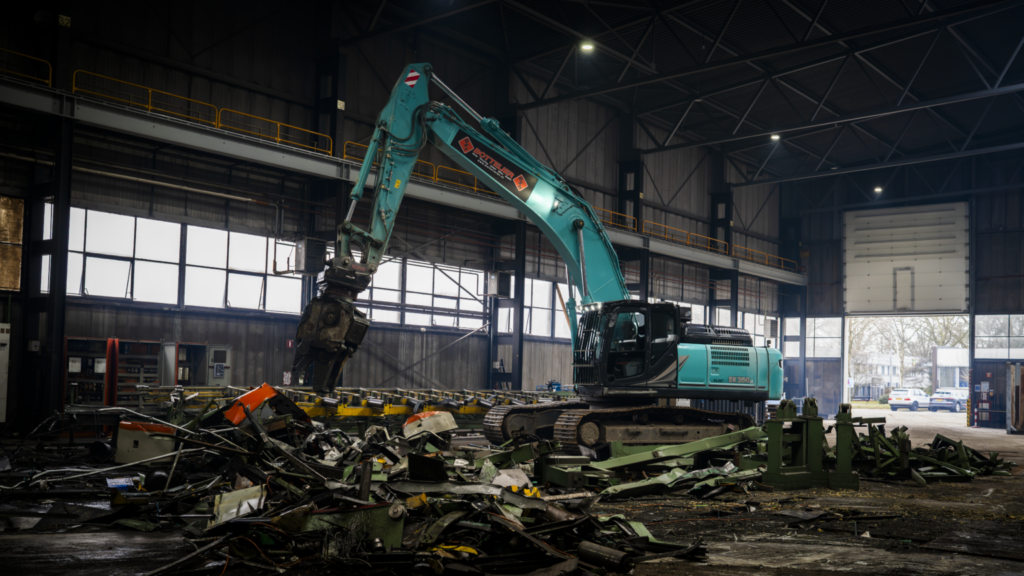
After the dismantling of a factory, machines are assessed based on their residual value and condition. Depending on this, they are reused, resold, disassembled for parts, or processed as raw materials. The path a machine follows depends on age, state of maintenance, the presence of hazardous substances, and market demand. In this article, we answer the most frequently asked questions about exactly what happens to machines after factory dismantling.
What options are available for machines after factory dismantling?
After the dismantling of a factory, there are four main options for machines: reuse at another location, resale on the second-hand market, dismantling for usable parts, or processing as scrap and raw material. The choice depends on the technical condition, the age of the installation, and whether a buyer can be found for the machine.
During large-scale industrial dismantling, machines are not simply disposed of. First, a structured inventory is conducted in which each installation is assessed. Machines that are still technically functional and have market value are preferably kept intact for relocation or sale. Only when reuse is not feasible does dismantling or demolition follow. This aligns with the principle of circular demolition, where the goal is to waste as little material as possible.
How is it determined which machines are still reusable?
The reusability of machines after demolition is determined based on technical condition, remaining service life, the presence of hazardous substances, and market demand. A machine that is still technically functional but is heavily contaminated or contains asbestos-containing parts is only eligible for reuse after remediation has taken place.
In practice, this assessment is carried out via a detailed inventory prior to the dismantling project. Technical specialists identify which installations and components are still saleable or reusable. This involves examining:
- The year of manufacture and the technical condition of the machine
- Presence of hazardous substances such as asbestos or chromium-6
- Demand from the second-hand market for industrial equipment
- Costs of cleaning and remediation versus residual value
Machines with a high residual value are actively marketed. In this way, the reuse of equipment prevents unnecessary scrapping and reduces the total environmental impact of the project.
What is the difference between dismantling and demolition of machines?
Dismantling of industrial machines means that an installation is taken apart in a controlled manner with the aim of reusing or relocating parts. Demolition of machines means that the installation is dismantled for material recovery, whereby the machine as a whole is lost. The difference lies in the intended end result: preservation of functionality in the case of dismantling, material recovery in the case of demolition.
During dismantling, components such as pumps, motors, heat exchangers, and piping are expertly disconnected and secured for relocation or resale. This requires technical knowledge of the installation and a careful approach to prevent damage. Scrapping is necessary when a machine has reached the end of its technical lifespan or when the costs of dismantling and transport exceed the residual value. The material, particularly metals, is then sorted and offered to recycling companies.
In practice, both methods are combined during factory dismantling. High-quality installations are dismantled, while outdated or severely damaged machines are scrapped.
How is hazardous substance discharged from machines?
Before machines are dismantled or scrapped, all hazardous substances must be inventoried and safely removed. This includes liquids such as oils, coolants, and process residues, but also solid materials such as asbestos in gaskets or insulation material and chromium-6 in paint layers. Disposal is carried out via certified procedures by specialized contractors with the appropriate permits.
In industrial installations, harmful residues can remain in pipes, tanks, and equipment after shutdown. Cleaning and degassing are therefore mandatory steps before the actual dismantling begins. This protects both the employees on the work floor and the environment surrounding the site.
The disposal of hazardous substances is subject to strict environmental legislation. Demolition companies performing this work must possess certifications such as the Asbestos Removal Process Certificate and SC 530. Without these certificates, it is not legally permitted to remove or process asbestos-containing materials.
What happens to metals and raw materials from dismantled machines?
Metals and raw materials from dismantled machinery are sorted, cleaned, and offered to specialized recycling companies. Steel, copper, aluminum, and other non-ferrous metals are kept separate because they each have their own processing chain and represent a significant residual value. In this way, valuable raw materials remain available for new production processes.
After the separation of the material streams, metals are transported to accredited processors who convert them into secondary raw materials. This is an important part of circular demolition: materials that can no longer be reused as products re-enter the chain as raw materials. In a professionally executed factory dismantling, the reuse rate of all released materials is high. A reuse rate of 99% is achievable when the material streams are properly managed and sorted.
In addition to metals, other materials such as concrete, insulation material, and plastic are released during the dismantling of machinery. These waste streams are also processed separately to avoid landfilling as much as possible and to minimize the overall environmental impact.
Who is responsible for machines during a factory dismantling?
Responsibility for machinery during factory dismantling rests jointly with the client and the contractor, but the division depends on the type of contract. In a turnkey dismantling, the contractor assumes full project responsibility, including inventory, remediation, dismantling, disposal, and documentation. The client remains the legal owner until the machinery is formally transferred or disposed of.
In practice, it is important that clear agreements are made in advance regarding who is responsible for which machines, at what time, and under what conditions. Consider the following:
- Transfer of ownership of machines being resold
- Liability for damage during dismantling
- Responsibility for the proper disposal of hazardous substances
- Documentation of what happened to each installation
A sound plan of action, including a risk analysis and safety plan, ensures that all parties involved know what is expected of them. This prevents disputes afterwards and guarantees a correct and documented handover of the site.
How we help with the dismantling of your factory
We oversee the entire factory dismantling process, from the initial inventory to the documented handover of the site. Whether it involves the reuse of valuable installations, the safe removal of hazardous substances, or the processing of released metals and raw materials, we ensure that every part of the process is executed carefully and in compliance with laws and regulations. This is what you can expect from us:
- A detailed inventory of all machines and installations prior to the project
- Certified removal of asbestos, chromium-6, and other hazardous substances
- Professional dismantling of reusable installations and marketing of equipment
- Responsible processing of material flows with a reuse rate of 99%
- Full project management and documented delivery, turn-key
Would you like to know how we can manage your dismantling project? Contact us and we will discuss the possibilities for your specific situation.