
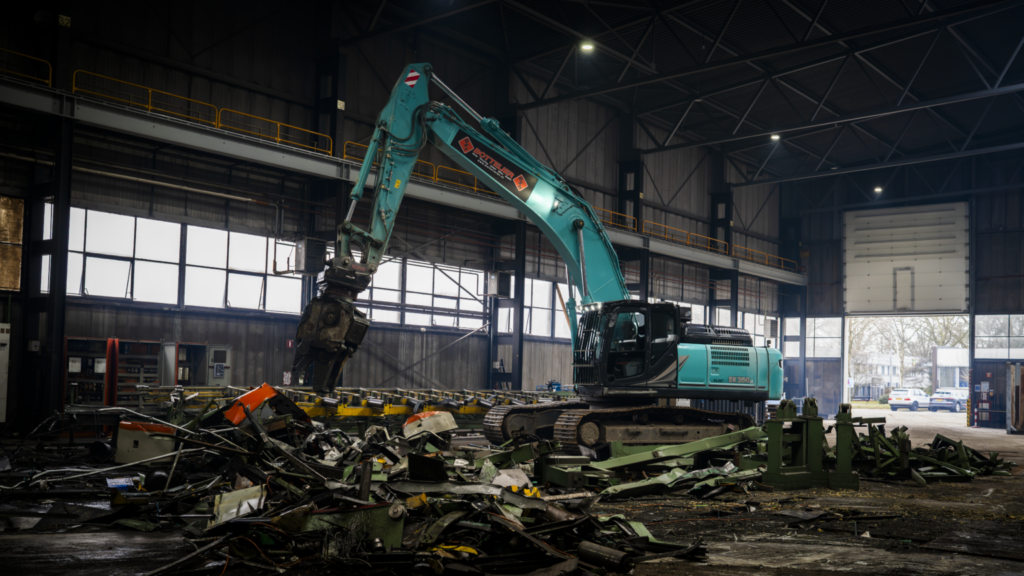
During the dismantling of a factory, waste materials are classified based on their chemical composition, origin, and hazardous properties. The European Waste List, better known as Eural, forms the legal framework for this. Each waste material is assigned a six-digit Eural code that determines how the material must be disposed of, processed, and documented. In this article, we answer the most frequently asked questions about waste classification in industrial demolition projects.
Which categories of hazardous waste are generated during factory dismantling?
During the dismantling of a factory, multiple categories of hazardous waste are generated, depending on the type of installation and the materials used. The most common categories are asbestos waste, chemically contaminated materials, oily waste, heavy metals, and hazardous process residues. All these substances fall under the classification of hazardous waste and require a specific processing route.
In petrochemical installations and power plants, it often involves a combination of multiple hazardous flows simultaneously. Examples include asbestos-containing insulation materials around pipes, residues from chemical process flows in tanks and reactors, PCB-containing transformers, and contaminated soil beneath the installation. Each of these flows has its own statutory processing obligation.
Hazardous waste from industrial demolition projects generally falls into the following main categories:
- Asbestos waste: Asbestos-containing materials such as insulation, sheets, and gaskets, which are collected separately and transported to a certified processor.
- Chemically contaminated materials: Pipes, tanks, and equipment that have been in contact with hazardous substances
- Oily waste: Lubricating oils, hydraulic fluids and contaminated absorbents
- Heavy metals: Materials containing lead, chromium-6, or cadmium that have specific processing requirements
- Hazardous process residues: Residual products in installations that remain after shutdown.
How does Eural coding for waste materials work in demolition projects?
The Euralcode is a six-digit code from the European Waste List that gives each waste material a unique classification. The code consists of three parts of two digits: the first two digits indicate the origin category, the second two the subcategory, and the last two the specific waste material. Waste materials with an asterisk (*) after the code are hazardous.
In industrial dismantling, multiple Eural categories apply simultaneously. For example, asbestos waste falls under Chapter 17 of the Eural (construction and demolition waste), but process residues from the chemical industry may fall under Chapter 07. Correctly assigning a Eural code is not merely an administrative formality. It determines which permits are required, which transport documents must be drawn up, and to which type of processing plant the waste may be disposed of.
In practice, the coding proceeds as follows:
- Inventory the materials and substances present in the installation
- Determine the origin of the waste material (production process, maintenance, demolition)
- Consult the Eural list to find the correct main category
- Check whether the substance has hazardous properties (HP criteria)
- Assign the definitive Euralcode, including asterisk if applicable
Who is responsible for waste classification in industrial demolition?
The primary responsibility for correct waste classification in industrial demolition lies with the waste disposer. In most cases, this is the client, i.e., the company that owns the factory or installation. The demolition contractor supports this process, but the ultimate legal responsibility for proper classification and disposal rests with the owner of the waste stream.
In practice, the client and the demolition contractor collaborate closely on waste classification. The contractor possesses the technical knowledge to identify and categorize materials, while the client has access to process data, drawings, and historical information regarding the substances used. Both parties record their agreements in a project-specific waste management plan.
When a certified demolition contractor is involved, they also bring the necessary certifications required for handling specific hazardous waste, such as the process certificate for asbestos removal. However, this does not relieve the client of their own obligations under the Environmental Management Act and the Decree on the Reporting of Industrial and Hazardous Waste.
What is the difference between hazardous and non-hazardous construction waste?
The difference between hazardous and non-hazardous construction waste lies in the presence of hazardous properties, referred to as HP criteria. Non-hazardous construction waste consists of materials such as concrete, masonry, wood, and clean metal. Hazardous construction waste contains substances that are toxic, flammable, corrosive, irritating, or environmentally hazardous, such as asbestos, tar, lead, or chemical contaminants.
In the Eural, hazardous waste is indicated with an asterisk. The same material stream can be hazardous or non-hazardous, depending on the contamination. Concrete rubble from a standard office floor is non-hazardous. Concrete rubble from a floor in a chemical plant that has been in contact with hazardous substances, however, can be hazardous.
Practical consequences of this distinction:
- Hazardous waste must not be mixed with non-hazardous waste
- Stricter requirements apply to the storage, transport, and processing of hazardous waste
- Hazardous waste must be reported to the competent authority via a notification or report
- The costs for processing hazardous waste are significantly higher
- Incorrect classification of hazardous as non-hazardous is a violation of environmental legislation
How is the waste inventory carried out before the demolition work?
A waste inventory prior to demolition work proceeds in phases: first, a document study based on construction drawings, process diagrams, and historical data, followed by a visual on-site inspection and, if necessary, material analysis via laboratory analyses. The result is a detailed overview of all waste streams present, including their Euralcodes and estimated quantities.
For industrial installations, the inventory phase is particularly intensive. Installations in the petrochemical, pharmaceutical, or food industries often contain a combination of asbestos-containing insulation, residues in pipes and tanks, and construction materials that have been exposed to chemical processes. All these aspects must be mapped out before the start of demolition work.
A good waste inventory includes at least the following steps:
- Collecting all available documentation regarding the building or the installation
- Visual inspection by a certified inspector or expert
- Sampling and laboratory analysis of suspected materials
- Drafting a demolition safety plan and waste management plan
- Submitting the demolition notification to the municipality with accompanying inventory reports
What documentation is required for the disposal of industrial demolition waste?
Several documents are legally required for the disposal of industrial demolition waste. For hazardous waste, there is a notification obligation, and a consignment note or e-Manifest must be drawn up. In addition, a weighbridge ticket from the processor, an acceptance certificate from the recipient, and proof of processing are required. Less strict documentation requirements apply to non-hazardous commercial waste, but registration is necessary here as well.
The documentation obligation serves multiple purposes. It provides the client with proof that waste materials have been processed correctly, which is relevant in the event of potential liability issues. It enables the competent authority to monitor waste streams. And it forms the basis for the environmental reporting that an increasing number of clients are requiring internally as part of sustainability reporting.
The most common mandatory documents for industrial demolition waste are:
- Demolition notification: Mandatory for demolition work generating more than 10 m³ of waste or where asbestos is present.
- Asbestos inventory report: Prepared by a certified inventory company (type A or B)
- Hazardous waste consignment note: Mandatory for every disposal of hazardous waste
- e-Manifesto: Digital registration of hazardous waste via the National Waste Reporting Centre
- Processing certificate: Proof that the waste has been processed by an approved processor
- Weigh slips and acceptance statements: From the receiving processor or recycler
How we help you with waste classification and dismantling
Correct waste classification during factory dismantling requires technical knowledge, the right certifications, and a structured approach. We handle the entire process, from the initial inventory to documented delivery. In concrete terms, this means:
- Conducting a full waste inventory including asbestos and materials testing
- Assigning the correct Euralcodes to all generated waste streams
- Handling all mandatory documentation, notifications, and processing certificates
- Separation, disposal, and processing of hazardous and non-hazardous waste via recognized processors
- Achieving a reuse rate of 99%, thereby minimizing scrapping and landfill costs
- Working with certifications such as ISO 14001, NEN-EN-ISO 9001, SC 530, and the Asbestos Removal Process Certificate
Would you like to know how we handle your dismantling project? Contact us for a no-obligation consultation.