
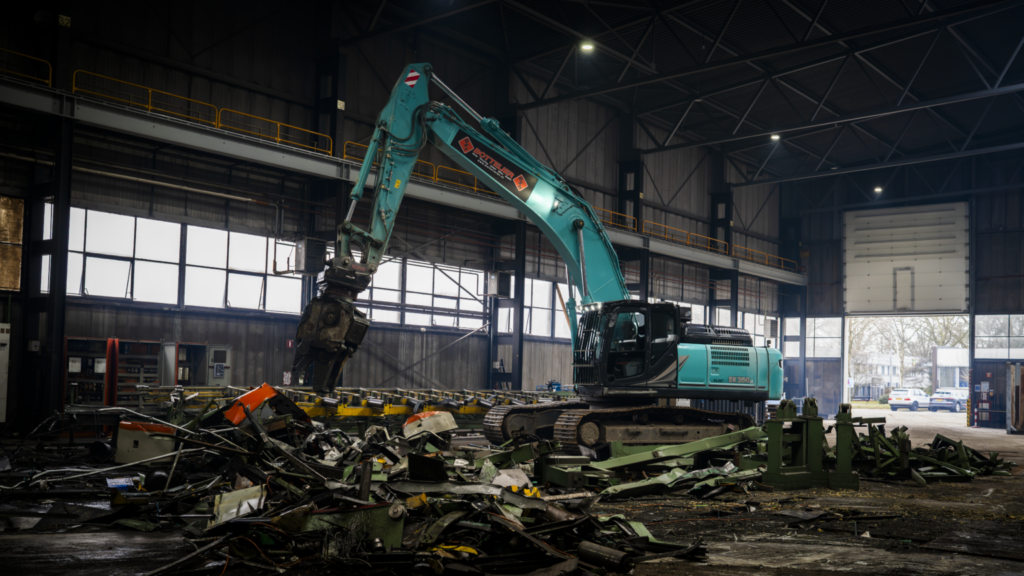
Factory dismantling has a direct impact on the surrounding community. Local residents experience temporary nuisances such as noise, vibrations, and dust, while the region faces both economic opportunities and challenges in the longer term. The degree of impact depends heavily on how professionally and systematically the dismantling process is carried out. The questions below provide a complete picture of what factory dismantling means for the surrounding area.
What direct nuisance does factory dismantling cause for local residents?
Factory dismantling primarily causes nuisance for local residents due to noise, vibrations, dust, and increased truck traffic. This disturbance is usually temporary in nature and limited to the active demolition phase, but can last from weeks to months depending on the project scope. Good planning and communication largely determine how severely this nuisance is perceived.
Demolition work involves heavy equipment: cranes, sledgehammers, and removal transport generate significant noise and mechanical vibrations. In urban or densely populated areas, this can noticeably disrupt the daily living environment. Dust dispersion is an additional concern, particularly during the demolition of older industrial buildings where materials such as asbestos or other harmful substances may be present.
Freight traffic is an underestimated aspect of industrial dismantling. The removal of demolition material, installations, and residual waste requires intensive transport, leading to additional pressure on local roads and potential traffic nuisance for residents and businesses in the vicinity.
What environmental and safety risks are associated with industrial dismantling?
Industrial decommissioning entails specific environmental and safety risks, including the release of hazardous substances such as asbestos, chromium-6, oils, and chemical residues. These risks are greatest at factories in the (petro)chemical, energy, or heavy industry sectors, where installations have been in contact with harmful processes for years.
After the shutdown of an industrial installation, toxic residues may remain in pipes, tanks, and equipment. Without proper cleaning and remediation procedures, these substances pose a risk to workers, local residents, and the environment. Soil contamination is a real danger when leaks or improper disposal of residual materials occur.
In addition to chemical risks, structural safety risks also play a role. Outdated factory buildings can be unstable, requiring controlled demolition techniques and thorough risk analyses before work begins. A professional contractor draws up a detailed safety plan for every project that takes into account both the safety of employees and the protection of the immediate surroundings.
How are local residents and authorities involved in a demolition project?
Local residents and authorities are involved through permit procedures, environmental notifications, and direct communication from the contractor or client. For larger demolition projects, formal participation is often legally required and forms part of the environmental permit that must be applied for in advance.
Municipalities play an active role in assessing demolition plans for safety and environmental standards. They evaluate applications for demolition permits and may impose additional requirements regarding working hours, dust management, or traffic measures to limit nuisance. Local residents have the right to participate in this process, depending on the size and location of the project.
In addition to formal procedures, proactive communication is an important part of good project management. Informing residents in a timely manner about the schedule, expected nuisance, and contact options in case of complaints reduces resistance and strengthens confidence in the project. Transparency regarding the approach and progress makes a major difference in how a demolition project is perceived by the surrounding community.
What are the economic consequences of factory dismantling for the region?
Factory dismantling has both negative and positive economic consequences for a region. In the short term, employment and economic activity disappear, but in the longer term, a vacated industrial site offers opportunities for redevelopment and new investments.
Short-term consequences: loss of employment and activity
When a factory closes and is dismantled, employees lose their jobs and suppliers and service providers who depended on the factory disappear. This has a direct effect on the local economy, particularly in regions where the factory was a major employer. Local hospitality, retail, and business services typically feel the impact quickly.
Long-term opportunities: redevelopment and new use
A remediated and ready-for-construction industrial site offers space for new economic activity. Redevelopment into housing, logistics, sustainable energy, or modern business parks can attract new employment and strengthen the regional economy. The quality of the handover, including soil remediation and infrastructure, largely determines how quickly and successfully redevelopment takes place.
How does a professional contractor minimize the impact on the environment?
A professional contractor minimizes the impact on the environment through detailed planning, the use of dust control and noise reduction techniques, strict adherence to environmental legislation, and proactive communication with local residents. Certifications and standardized work procedures ensure that safety and environmental protection are not an afterthought, but the foundation of the project.
Concrete measures that a professional contractor employs to limit nuisance include:
- Working within established time windows to limit noise nuisance
- Dust screens and humidification techniques to prevent dust dispersion
- Logistical planning of transport movements to minimize traffic disruption
- Prior cleaning of installations to prevent the release of hazardous substances
- Selective dismantling and reuse of materials to minimize waste streams
Sustainability plays an increasingly important role in this. By reusing materials as much as possible instead of destroying them, the total environmental impact of a dismantling project is significantly reduced. This requires a contractor with both technical knowledge and a sustainable working method.
How we limit the impact of decommissioning on your surroundings
We understand that factory dismantling goes beyond demolishing a building. It affects local residents, local authorities, and the environment. Therefore, we approach every project as an integrated process in which environmental impact is central from start to finish. We do this specifically by:
- To draw up a tailor-made advice and safety plan for each project
- To handle all necessary permit applications and coordinate with the competent authorities
- To carry out cleaning and sanitation of installations before the actual dismantling begins
- To achieve a reuse rate of 99%, thereby significantly limiting the impact on the environment
- To be delivered turnkey, from initial advice to site ready for construction
Our extensive certifications, including ISO 14001, NEN-EN-ISO 9001, SC 530, and VCA Petrochemicals, give you the assurance that operations meet the strictest safety and environmental requirements. Would you like to know how we can handle the dismantling of your plant with minimal impact on the surrounding area? Contact us for a no-obligation consultation.