
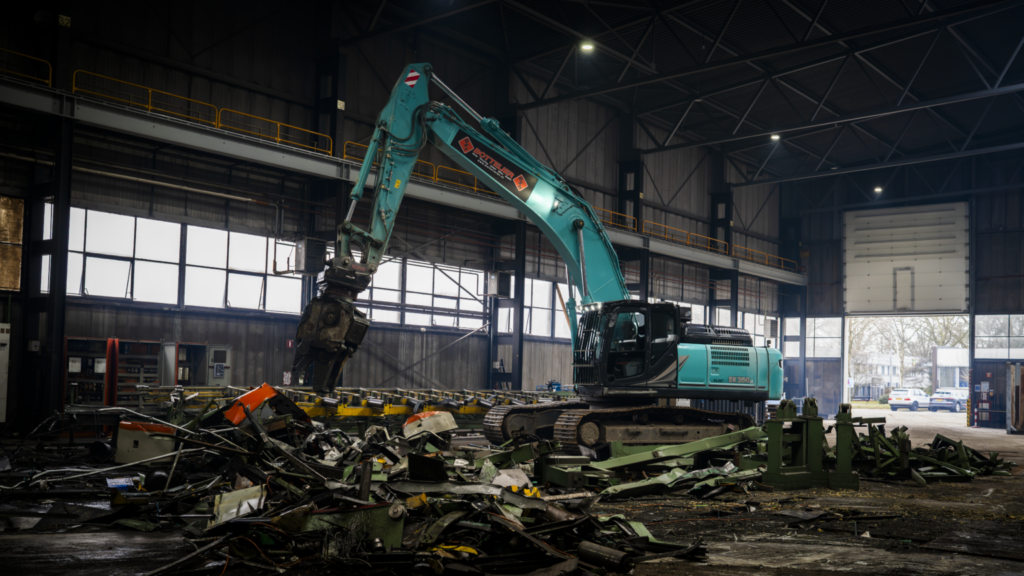
The hidden costs involved in dismantling production facilities are significantly higher than the direct demolition costs alone. Consider asbestos remediation, permit procedures, soil investigations, downtime risks, and additional cleaning work that only becomes apparent during execution. For industrial clients, this means that in practice, actual demolition costs in the industry can easily turn out to be two to three times higher than the initial quotation suggests. In this article, we answer the most frequently asked questions about the cost items you do not want to miss when dismantling a factory or production facility.
Which cost items are most often underestimated in industrial demolition?
The most underestimated cost items in industrial demolition are preliminary investigations, cleaning of installations, disposal of hazardous substances, and unforeseen structural interventions. These items are often not included or are only partially included in early budget estimates, causing the actual budget for the dismantling of a factory to be significantly exceeded.
In practice, we observe that the following items are systematically underestimated in industrial dismantling projects :
- Cleaning costs: After shutdown, industrial installations often contain harmful residues such as oil, chemicals, or process residues. Specialized procedures are required for cleaning to protect people and the environment.
- Soil investigation and remediation: At older production facilities, soil contamination is a real risk. A baseline study is mandatory, and remediation can be a major expense.
- Structural modifications: When a part of a building or installation remains in use, temporary supports, screens, or other structural measures are required.
- Documentation and delivery: Documented delivery, including measurement reports, demolition declarations, and environmental certificates, costs time and money but is legally required.
A realistic budget begins with a detailed inventory before the start of the project. Those who skip this pay the price later in the process.
What does asbestos removal cost when dismantling an industrial installation?
Asbestos remediation during the dismantling of an industrial installation is one of the heaviest cost items and can range from tens of thousands to hundreds of thousands of euros, depending on the extent and type of asbestos. The exact costs depend on the quantity and risk class of the asbestos found, the accessibility of the site, and the required remediation method.
Asbestos is present in many industrial buildings and installations in the Netherlands built before 1994. During dismantling, an asbestos inventory report is mandatory before demolition work begins. That report determines the remediation method and, consequently, the costs.
Factors that strongly influence the cost of asbestos removal:
- Risk class: Risk class 1 (bonded asbestos) is cheaper to remediate than risk class 2 or 3, where stricter control measures and personal protective equipment are mandatory.
- Quantity and location: Asbestos in hard-to-reach pipes, roof sheathing, or insulated installations increases labor intensity and therefore the price.
- Certified execution: Asbestos remediation may only be carried out by certified companies holding the asbestos removal process certificate (SC 530). This is not optional; it is legally required.
Anyone who includes asbestos removal in the budget too late or underestimates it runs the risk of project delays and extra costs due to downtime.
How do permits and regulations affect total demolition costs?
Permits and regulations increase the total costs of demolishing industrial installations due to mandatory surveys, application procedures, waiting times, and compliance with environmental legislation. In complex projects, permit processes can take several months, thereby significantly impacting lead time and project costs.
For the dismantling of a production facility in the Netherlands, you generally deal with:
- Environmental permit for demolition: Mandatory depending on the municipality and the type of object, including a demolition notification to the competent authority.
- Environmental legislation: The disposal of hazardous substances, asbestos, and chemically contaminated materials is subject to strict regulations under the Environmental Management Act.
- BRZO regulations: For (petro)chemical installations, additional safety requirements apply under the Major Accidents Risks Decree, which requires extra documentation and safety planning.
- Soil legislation: A baseline survey and a final situation survey are mandatory when delivering an industrial site ready for construction.
The costs for permits themselves are relatively limited, but the indirect costs due to delays, additional research, and adjustments to the project plan can be substantial. An experienced demolition partner who handles permit applications themselves shortens the turnaround time and prevents unnecessary delays.
What are the costs of demolition during ongoing production?
Demolition during ongoing production entails additional costs due to increased safety requirements, phased planning, additional shielding, and a longer total execution time. Nevertheless, in many cases, it is cheaper than a complete production shutdown, especially when the daily downtime costs are high.
When dismantling a factory while production continues, you must take into account:
- Phased execution: Demolition takes place in zones and time windows aligned with the production process. This requires more coordination and planning.
- Additional safety measures: Dust screens, noise reduction, monitoring of access zones, and continuous communication with the production department are mandatory and cost more.
- Longer lead time: Working within limited time windows extends the total project duration, which affects the daily rates of equipment and personnel.
For industrial clients with a high daily production value, however, demolition during production is often the most financially sound choice. In such cases, the additional costs of carrying out the demolition do not outweigh the loss of revenue resulting from a prolonged production stoppage.
How do reuse and recycling reduce net demolition costs?
The reuse and recycling of released materials reduce net demolition costs by offsetting the revenue value of metals, installations, and construction materials against the total project price. The higher the reuse percentage, the lower the net costs for the client.
The dismantling of industrial installations releases large quantities of steel, copper, aluminium, and process equipment. These materials have a market value that can directly benefit the project budget.
Concrete benefits of a circular approach:
- Material revenues: Released metals are sold on the raw materials market. The revenue reduces the net invoice value of the demolition project.
- Relocation of installations: Complete production lines or machines that are still functional can be dismantled and relocated or sold. This yields more than scrapping.
- Lower landfill costs: The more material is reused or recycled, the less waste goes to the landfill. Landfill costs for industrial demolition waste are high.
- Sustainability benefits: A high reuse rate counts towards the client's CO2 reports and CSR reporting.
A reuse rate of 99% is not a marketing term but a measurable result that directly impacts the total cost of decommissioning a production facility.
When is a turnkey demolition contract more cost-effective than separate assignments?
A turnkey demolition contract is more cost-effective than separate assignments when the project involves multiple disciplines, such as asbestos removal, dismantling, cleaning, and soil remediation, and when coordination between those disciplines directly impacts the lead time and the final result. The more complex the project, the greater the benefit of having a single responsible party.
With separate assignments per discipline, coordination costs, interface risks, and ambiguities regarding responsibilities arise. Who is responsible if asbestos removal is delayed and the demolition crew stands still? With a turnkey contract, that responsibility lies with a single contractor.
A turnkey approach is particularly more cost-effective when:
- The project comprises a combination of demolition, remediation, and site handover
- The client has no in-house project management capacity for coordination
- Statutory permits and surveys are handled by a single party
- The schedule is tight and downtime of adjacent production must be avoided
- Documentation and documented delivery are a contractual obligation
In most complex projects, the additional cost of a turnkey contract is more than offset by lower coordination costs, shorter lead times, and fewer unforeseen additional works.
How we help you with the dismantling of your production facility
We offer industrial clients a complete turnkey solution for the dismantling of production facilities, from initial survey to documented delivery ready for construction. Our approach aims to make hidden costs visible before they become a problem.
What you can expect from us:
- Detailed inventory of asbestos, hazardous substances, and structural risks in advance
- Handling of all permit applications and legally required investigations
- Execution of cleaning, dismantling, asbestos removal, and demolition by one certified team
- Active marketing of reusable installations and materials to reduce net project costs
- Possibility of execution during ongoing production, without disrupting your business process
- Documented delivery including all legally required reports and certificates
We work with certifications including ISO 14001, NEN-EN-ISO 9001, SC 530, VCA Petrochemicals, and CSR Performance Ladder Level 3. Would you like to know what the dismantling of your production facility will actually cost? Contact us for a no-obligation assessment.