
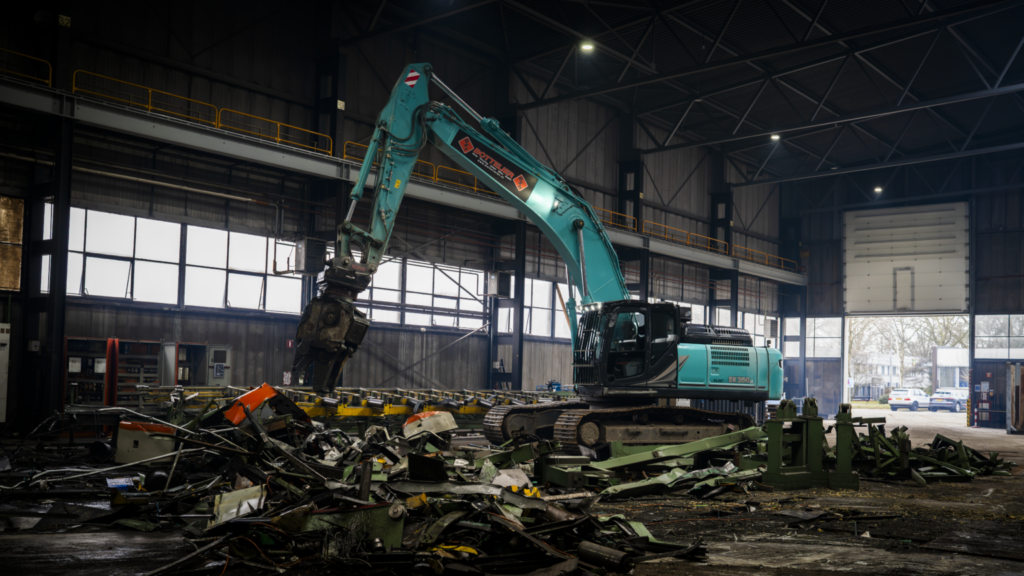
The dismantling of heavy industry presents technical challenges regarding hazardous substances, structural safety, logistics, and accessibility. Industrial installations are typically complex in structure, contain residues from hazardous processes, and sometimes remain partially operational during the work. The questions below provide a clear picture of the key technical aspects involved in industrial dismantling.
Which hazardous substances are released during the dismantling of industrial installations?
During the dismantling of industrial installations, hazardous substances may be released, such as asbestos, chromium-6, heavy metals, process residues from chemical or petrochemical substances, and volatile organic compounds. The exact substances present depend on the sector and the age of the installation. A prior inventory is therefore an important part of every dismantling project.
Historically, asbestos is one of the most common hazardous substances in older industrial structures. Until the 1990s, the material was widely used as insulation around pipes, boilers, and structures. Damage or removal releases asbestos fibers that cause serious health damage if inhaled. Chromium-6 is found in aged paint layers on steel structures and is also harmful upon exposure.
In addition to these known substances, process plants may contain residues of the substances that have passed through them after shutdown: acids, solvents, hydrocarbons, or biocides. Thorough cleaning of the installation prior to physical dismantling is therefore not an optional step, but a technical necessity to protect people and the environment. Only after documented cleaning and clearance can the actual dismantling work start safely.
How is structural safety ensured during the demolition of heavy installations?
Structural safety during the demolition of heavy industrial installations is ensured by a combination of detailed risk analyses, safety plans, and phased execution. The load-bearing capacity and stability of structures are assessed in advance so that the dismantling sequence does not compromise the integrity of the whole.
An industrial installation is rarely a standalone object. Columns, platforms, pipe bridges, and reactor vessels are interconnected and bear each other's weight. Removing a single component without analyzing the structural cohesion can lead to unexpected instability of adjacent parts. Therefore, a specialized contractor draws up a detailed plan of action in advance, including the sequence and method of dismantling.
In addition to the structural analysis, the working environment and personal protection also play a major role. Additional safety requirements apply at great heights, in confined spaces, or in the vicinity of active installations. Certifications such as VCA Petrochemie and SC 530 are relevant quality marks in this regard, demonstrating that a contractor meets the strict standards for safe working in industrial environments.
What makes dismantling at operational installations technically more complex?
Dismantling at operational installations is technically more complex because work must be carried out without disrupting the ongoing production process. This places additional demands on planning, shielding, safety procedures, and coordination between the demolition team and the client's operational department.
In practice, this means that demolition work is sometimes only permitted outside production hours or in designated zones. Dust, vibrations, and noise must not affect nearby active processes or equipment. This requires precise zoning of the workplace, adapted working methods, and close coordination with the factory's safety officers.
In addition, account must be taken of active pipelines and energy sources running through or alongside the installation to be dismantled. Correctly identifying, isolating, and locking out these systems, also known as “lock-out/tag-out” procedures, is a technically intensive process that requires detailed knowledge of the installation. An error at this stage can pose direct safety risks to both the demolition team and operational personnel.
What technical requirements apply to the transport and disposal of demolition material from industry?
Specific technical and legal requirements apply to the transport and disposal of industrial demolition material, depending on the nature of the material. Hazardous waste such as asbestos, chemically contaminated materials, or radioactively contaminated scrap requires certified processing and documented disposal via recognized processors.
Non-hazardous demolition materials such as steel, concrete, and copper have their own logistical requirements. Steel structures are typically dismantled into manageable sections that are removed using cranes or specialized transport equipment. The dimensions and weight of these sections determine the type of transport required and whether temporary on-site storage is possible.
Circular thinking plays an increasingly important role in this. Materials that can be reused are kept separate and offered for repurposing or sale. This applies particularly to complete process installations or machines that can be put back into use elsewhere. A reuse rate of 99% is achievable when dismantling is carried out carefully and sorted, which also significantly reduces the amount of waste destined for incineration or landfill.
How do location and accessibility influence the technical approach to industrial dismantling?
The location and accessibility of an industrial facility directly influence the choice of demolition techniques, the equipment to be deployed, and the logistical planning. Poorly accessible terrain, limited access roads, or nearby buildings can complicate the use of large cranes or heavy transport equipment and require alternative working methods.
On port sites or in densely built-up industrial areas, space for positioning equipment is often limited. Tall installations such as chimneys, reactor towers, or silos require precise calculations of the drop zone during controlled demolition. If that space is not available, piece-by-piece dismantling from above is chosen, which requires more time and specialized equipment.
The load-bearing capacity of the subsoil also plays a role. Heavy cranes and transport vehicles place high demands on the foundations of access roads and staging areas. On sites with contaminated soil or soft subsoil, additional measures are necessary to prevent subsidence or soil damage. A thorough preliminary site survey, including soil investigation and site analysis, is therefore a technically relevant step in the preparation of any decommissioning project.
How we help with the dismantling of heavy industry
We manage industrial decommissioning projects from start to finish, including all the technical challenges described above. What we take care of for you:
- Prior inventory of hazardous substances, including asbestos and chromium-6
- Cleaning of installations before physical dismantling starts
- Tailor-made safety plans and risk analyses per project
- Dismantling at operational installations without disrupting the production process
- Documented disposal and processing of demolition material, with a reuse rate of 99%
- Turnkey delivery of the site, including soil remediation if necessary
We hold certifications such as VCA Petrochemicals, NEN-EN ISO 9001, NEN-EN ISO 14001, and the Asbestos Removal Process Certificate, demonstrating that we meet the strictest standards for industrial demolition work. Would you like to know how we technically approach your demolition project? Contact us for a no-obligation consultation.